Category: Power Wheelchair
Posted by 2025-12-26 11:12
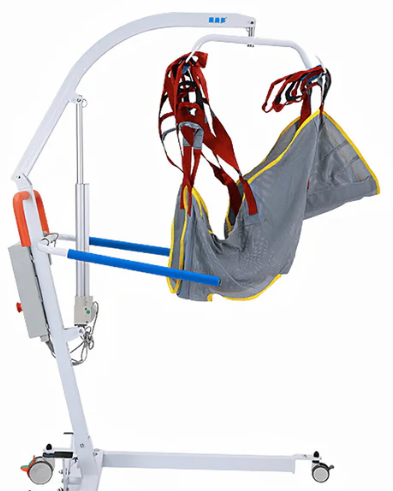
hoyer lift fall
In-depth Analysis of Fall Risk Factors
Equipment-related Risks
Sudden lowering caused by hydraulic system failure
Support failure due to worn or torn slings
Accidental disengagement from faulty hook latches
Equipment movement resulting from ineffective base wheel brakes
Operation-related Risks
Caregivers’ insufficient training and non-standard operations
Inadequate communication before transfer
Hasty operations with neglected safety checks
hoyer lift fall
hoyer lift fall
Overloading the equipment
Environment-related Risks
Slippery or uneven floors
Narrow spaces restricting equipment operation
Insufficient lighting impairing visibility
Obstacles blocking the transfer path
Three-level Prevention System
Primary Prevention: Fundamental Prevention
Equipment Procurement Standards
Select hook systems with double safety locks
Ensure hydraulic systems have anti-sudden-drop devices
Choose models with stable bases
Operation Standardization
Develop written operation procedures
Establish an equipment inspection recording system
Implement a two-person verification mechanism
Secondary Prevention: Process Control
Pre-operation Inspection Checklist
Check sling integrity
Test hook latches
Test hydraulic systems
Evaluate floor conditions
Assess the user’s physical state
Real-time Monitoring Indicators
Changes in the user’s facial expressions
Abnormal equipment noises
Sling position deviation
Base stability status
Tertiary Prevention: Damage Control
Emergency Response Plans
First-response procedures after a fall
Medical assistance procedures
Incident reporting mechanisms
Rehabilitation Support
Psychological counseling services
Physical rehabilitation programs
Care resumption plans
Standardized Safety Inspection Procedures
Pre-use Inspection (Daily)
Visually inspect slings for wear
Manually test all hook latches
Test lifting/lowering functions with no load
Check wheel rotation and brakes
In-depth Inspection (Weekly)
Check for hydraulic oil leaks
Test emergency lowering devices
Inspect structural component stability
Clean and maintain moving parts
Professional Inspection (Monthly)
Load-bearing tests
System pressure detection
Validation of safety device effectiveness
Comprehensive maintenance
Emergency Response When a Fall Occurs
Phase 1: Immediate Response (0–2 minutes)
Stay calm and assess on-site safety
Call for help and activate emergency response
Protect the fallen person to prevent secondary injuries
Check consciousness and breathing
Phase 2: Initial Handling (2–10 minutes)
Conduct basic vital sign checks
Record details of the fall
Comfort the fallen person
Prepare for medical transportation
Phase 3: Follow-up (After 10 minutes)
Accompany the person to the hospital and provide detailed information
Conduct a root cause analysis of the incident
Develop plans to prevent recurrence
Provide psychological support
Fall Prevention Key Points for Special Populations
Patients with Cognitive Impairment
Use simple and clear operation prompts
Increase comfort measures during transfer
Avoid sudden movement changes
Physically Weak Patients
Adopt phased transfer methods
Provide additional support and protection
Extend transfer preparation time
Obese Patients
Use dedicated heavy-duty equipment
Ensure sufficient operation space
Consider two-person assisted operation
Training and Capacity Building
Basic Training Content
Understanding of equipment principles and structure
Training on standardized operation procedures
Development of safety inspection skills
Emergency response drills
Advanced Training Programs
Skills for handling complex situations
Ability to develop personalized plans
Team collaboration training
Learning quality control methods
Continuing Education Mechanisms
Quarterly retraining system
Case sharing sessions
Learning of new technologies
Experience exchange platforms
Technological Improvements and Innovations
Safety Device Upgrades
Intelligent weight sensing systems
Anti-fall mechanical protection devices
Automatic balance adjustment functions
Real-time monitoring and alarm systems
Auxiliary Equipment Innovations
Anti-slip transfer mats
Intelligent safety slings
Automatic positioning bases
Remote monitoring devices
Quality Improvement Cycle
Data Collection
Record key data for each transfer
Establish a near-miss reporting system
Collect user feedback
Track equipment maintenance records
Analysis and Improvement
Conduct regular data analysis
Identify risk trends
Develop improvement measures
Evaluate the effectiveness of measures
Standardization and Promotion
Standardize effective practices
Promote best practice sharing
Update training materials
Improve management systems
Conclusion
Preventing Hoyer Lift-related falls is an ongoing process that requires comprehensive and systematic solutions. hoyer lift fall By improving equipment maintenance, standardizing operation procedures, enhancing staff training, and establishing emergency systems, we can minimize fall risks. Remember, every safety detail is related to the dignity of life, and every standardized operation reflects professional care. Let us use professionalism and dedication to build a solid safety defense line, making care a truly warm and reliable presence.